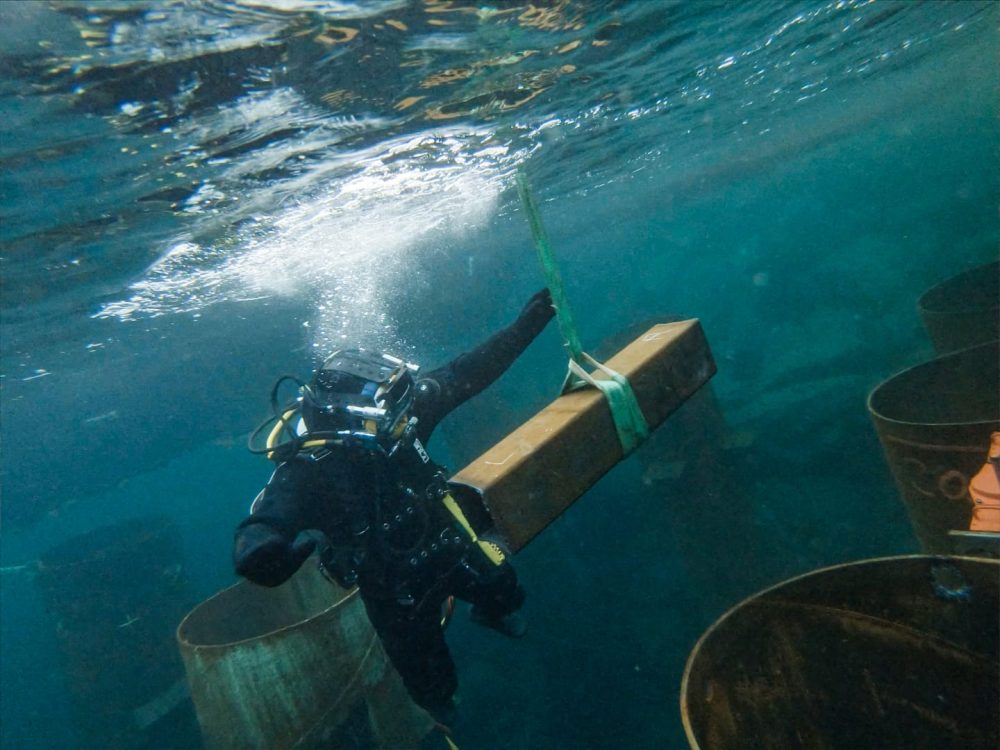
Underwater welding is a critical engineering discipline essential for the construction, maintenance, and repair of offshore structures, pipelines, and submerged infrastructure in the Baltic Sea. Operating in the marine environment presents severe challenges, including high hydrostatic pressure, low visibility, strong bottom currents, and cold water temperatures. These physical constraints demand rigorous planning, specialized diving equipment, and certified personnel to ensure the integrity of structural welds.
Types of Underwater Welding Techniques
Engineering teams deploy two primary methodologies when executing welding tasks beneath the surface: wet welding and hyperbaric welding. Each approach serves distinct applications depending on depth, structural requirements, and quality standards.
Wet Welding
Wet welding, or shielded metal arc welding underwater, involves direct contact with the surrounding water. Special waterproof electrodes are utilized, and the electric arc generates a gas bubble that shields the molten metal from the water. While wet welding is highly versatile, rapid cooling rates caused by the surrounding water can increase hardness and introduce micro-cracks in the heat-affected zone. Consequently, this method is typically reserved for temporary repairs, non-structural maintenance, and emergency fixes where mobilization of a habitat is impractical.
Hyperbaric Welding
Hyperbaric welding achieves superior metallurgical quality by enclosing the work area in a dry chamber filled with a pressurized gas mixture, usually helium and oxygen or argon. Welders operate within a controlled atmosphere that mirrors the ambient pressure at depth. This technique eliminates direct water contact, significantly reducing cooling rates and preventing hydrogen cracking. Hyperbaric welding is subdivided into ambient pressure welding inside a small habitat and one-atmosphere welding within a rigid steel chamber. It is the preferred method for high-stress pipeline repairs and critical offshore installations.
Inspection and Quality Assurance
Because structural failures underwater can lead to catastrophic environmental and economic consequences, rigorous quality assurance is mandatory. Non-destructive testing methods are routinely employed to evaluate weld integrity. Commercial divers and ROV operators utilize ultrasonic testing, magnetic particle inspection, and alternating current field measurement to detect surface and subsurface defects. In many cases, remotely operated vehicles assist by positioning cameras and sensors in hazardous zones before human divers enter the water.
Environmental Factors in the Baltic Region
The Baltic Sea introduces specific environmental complexities that influence diving operations and welding schedules. Brackish water, variable salinity, and shifting silt layers often reduce underwater visibility to near zero. Furthermore, unexploded ordnance from historical conflicts remains a persistent hazard across various maritime zones. Before any welding or hot work commences, comprehensive site surveys using side-scan sonar and multibeam echosounders are conducted to verify seabed safety. Surface support vessels must maintain precise dynamic positioning to ensure the safety of the diving bell and support personnel throughout the operation.
Ultimately, successful underwater welding relies on the seamless integration of naval architecture, marine engineering, and advanced commercial diving protocols. As offshore energy projects and subsea networks expand across northern Europe, the demand for precise, reliable underwater metal joining techniques continues to grow steadily.