
Introduction to Subsea Cutting
Underwater cutting is a critical operational requirement in commercial diving and marine engineering. Within the challenging conditions of the Baltic Sea, maintenance, decommissioning, and emergency intervention often demand precise thermal or mechanical severance of steel, concrete, and composite structures. Dronelab has operated in these waters since 2006, executing complex subsea tasks where precision, safety, and material metallurgy dictate the choice of cutting technology. Understanding the fundamental techniques available to commercial dive teams and remotely operated vehicle operators ensures that marine projects are executed efficiently and without structural compromise.
Thermal Cutting Methods
Thermal cutting underwater relies on combustion or electrical arcs to melt and oxidize material. Oxygen-arc cutting is one of the most common approaches utilized by commercial divers. This method employs a specialized torch supplied with oxygen and an electrical power source to ignite and maintain a molten puddle, while high-pressure oxygen is blown through the center of the electrode to blast away the slag. It is effective on carbon steel, stainless steel, and cast iron, making it invaluable for platform salvage and pipeline modifications.
Exothermic cutting, another widely applied thermal technique, utilizes a special cutting rod that burns at extremely high temperatures once ignited. The chemical reaction within the rod itself generates enough heat to melt virtually any material, including non-ferrous metals and concrete. This method is particularly useful in zero-visibility conditions frequently encountered in Baltic waters, as the operator relies more on tactile feedback and the sheer thermal output of the reaction rather than a stable electric arc. However, thermal cutting underwater introduces significant thermal shock to the surrounding material, which must be accounted for during engineering assessments.
Mechanical and Hydraulic Cutting
When thermal methods present safety hazards, such as in proximity to flammable hydrocarbons or sealed compartments, mechanical and hydraulic systems are deployed. Hydraulic diamond wire saws offer exceptional precision when cutting through thick concrete gravity-based structures, bridge piers, or heavily reinforced bulkheads. The continuous loop of wire embedded with industrial diamonds is driven by hydraulic power units positioned on the surface support vessel or integrated into heavy-duty work-class ROVs.
Hydraulic shears and rotary disc cutters represent another category of cold-cutting tools. These are frequently mounted on hydraulic manipulators or ROV tool skids. They provide rapid severance of cables, mooring lines, small-diameter piping, and structural steel profiles without generating sparks or ignition sources. The absence of an open flame makes mechanical cutting the preferred choice for specific offshore oil and gas decommissioning tasks as well as port infrastructure repairs where environmental safety is paramount.
Operational Challenges in the Baltic Sea
Executing underwater cutting operations in the Baltic Sea presents distinct environmental hurdles. Low visibility caused by plankton blooms and suspended sediment often forces divers and ROV pilots to rely heavily on sonar imaging, tactile navigation, and pre-job measurements. Furthermore, cold water temperatures accelerate diver fatigue and can affect the performance of hydraulic fluids and specialized electrical insulation. Tidal currents, while generally less extreme than in the Atlantic, still create localized hazards around submerged wreck sites and narrow straits.
Corrosion and marine growth further complicate the cutting process. Piles and hulls encrusted with thick layers of barnacles and mussels must be thoroughly cleaned before any torch or saw can make direct contact with the base metal. Neglecting surface preparation leads to inefficient cuts, excessive consumable usage, and potential safety risks from trapped pockets of gas or organic material reacting violently to thermal energy.
Safety Protocols and Quality Control
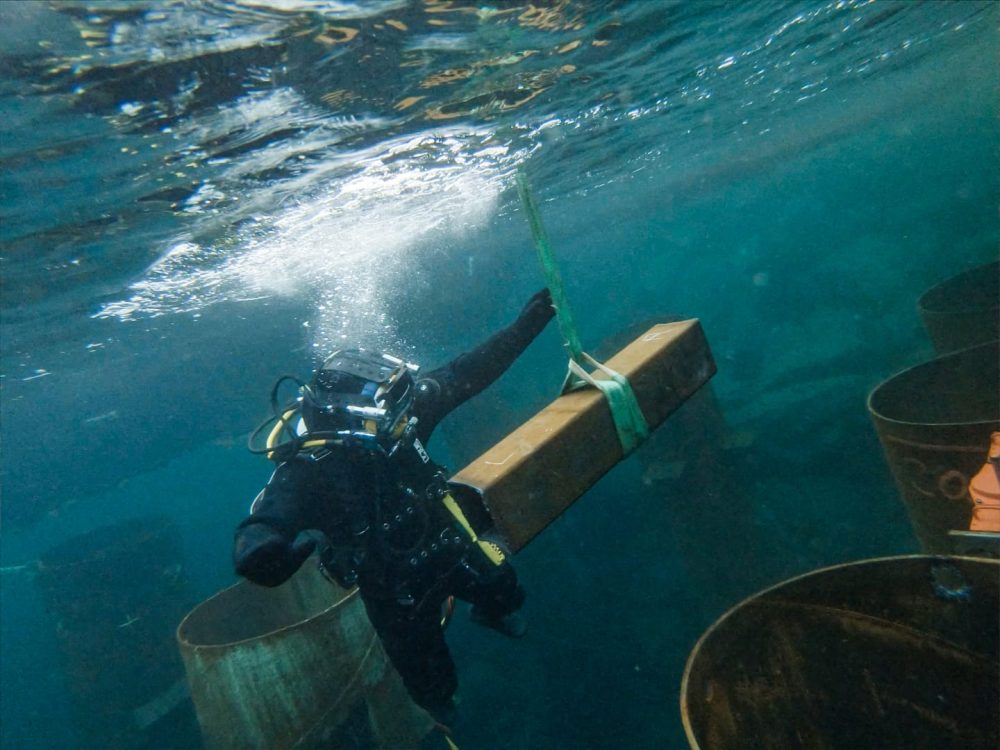
Safety is the primary metric of success in any commercial diving or subsea intervention. Underwater cutting introduces hazards such as hydrogen and oxygen pocket explosions, electric shock, burns, and falling structural loads. Divers and surface support crews must adhere to strict gas management protocols, depressurize systems entirely before severance, and utilize proper rigging to control cut sections and prevent uncontrolled drops.
Quality control is equally demanding. Non-destructive testing methods, including ultrasonic thickness measurements and magnetic particle inspection, are often deployed after a cut is completed to evaluate the remaining structural integrity. By combining rigorous planning, experienced personnel, and the appropriate technology, marine contractors maintain the high standards required for critical infrastructure maintenance across the region.